

Overview
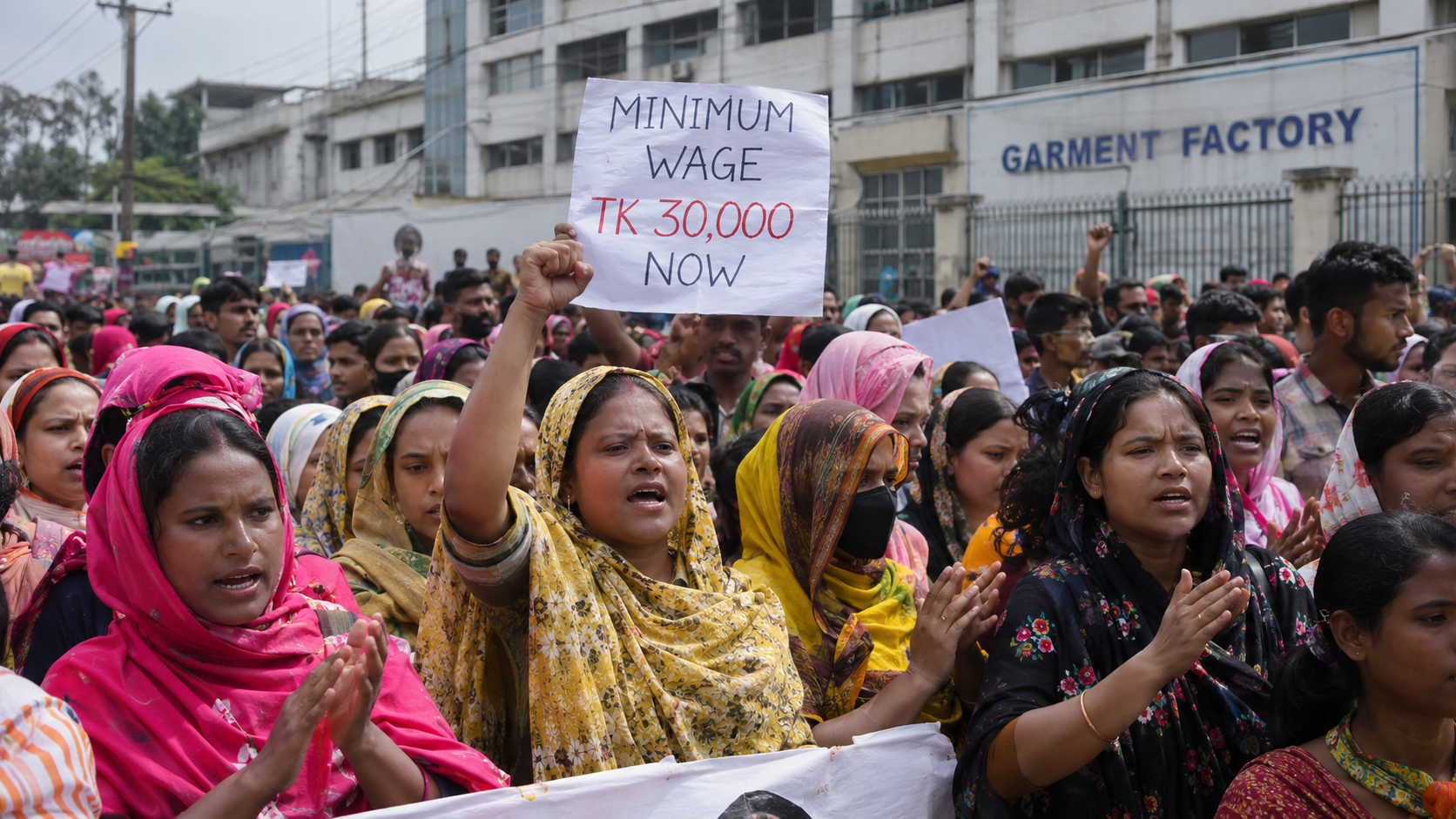
- Nearly 150 garment factories have suspended operations amid widespread strikes and protests
- Workers are demanding higher wages to cope with the rising cost of living
- Major hubs, including Savar, Ashulia and Gazipur, are affected
- Concerns are growing over production and export shipments from one of the world’s largest apparel producers
Workers’ Demands
- Minimum monthly wage to rise from 12,500 taka to 30,000 taka, a 140% increase
- Workers say current pay is insufficient to cover food, accommodation, transport and healthcare
Escalation of Protests
- Demonstrations intensified over the weekend
- Workers blocked major roads and protested outside factories
- On Sunday (15), protesters blocked the Dhaka–Tangail highway in Gazipur for about an hour before police intervened
Factory Closures
- Per Bangladeshi media, production was suspended at 121 factories on Sunday
- 65 factories were declared closed indefinitely under labour laws
- Manufacturers warn that factories hit by continued unrest could face indefinite closure under the Labour Act’s “no work, no pay” provision
Government Response
- A wage board has been set up to review the minimum wage
- Discussions involve workers’ representatives and factory owners
Industry Impact
- The apparel sector employs about four million workers
- It accounts for more than 80% of Bangladesh’s export earnings
- Ongoing unrest raises concerns about the country’s export industry
Regional Angle
- Bangladesh is one of Sri Lanka’s major competitors in the global apparel market
- Both countries supply garments to international clothing brands
