

The Capitalist- Business Desk
Global fertiliser markets are facing renewed pressure after China moved to restrict exports, compounding supply disruptions already linked to the escalating conflict involving Iran and its regional adversaries.
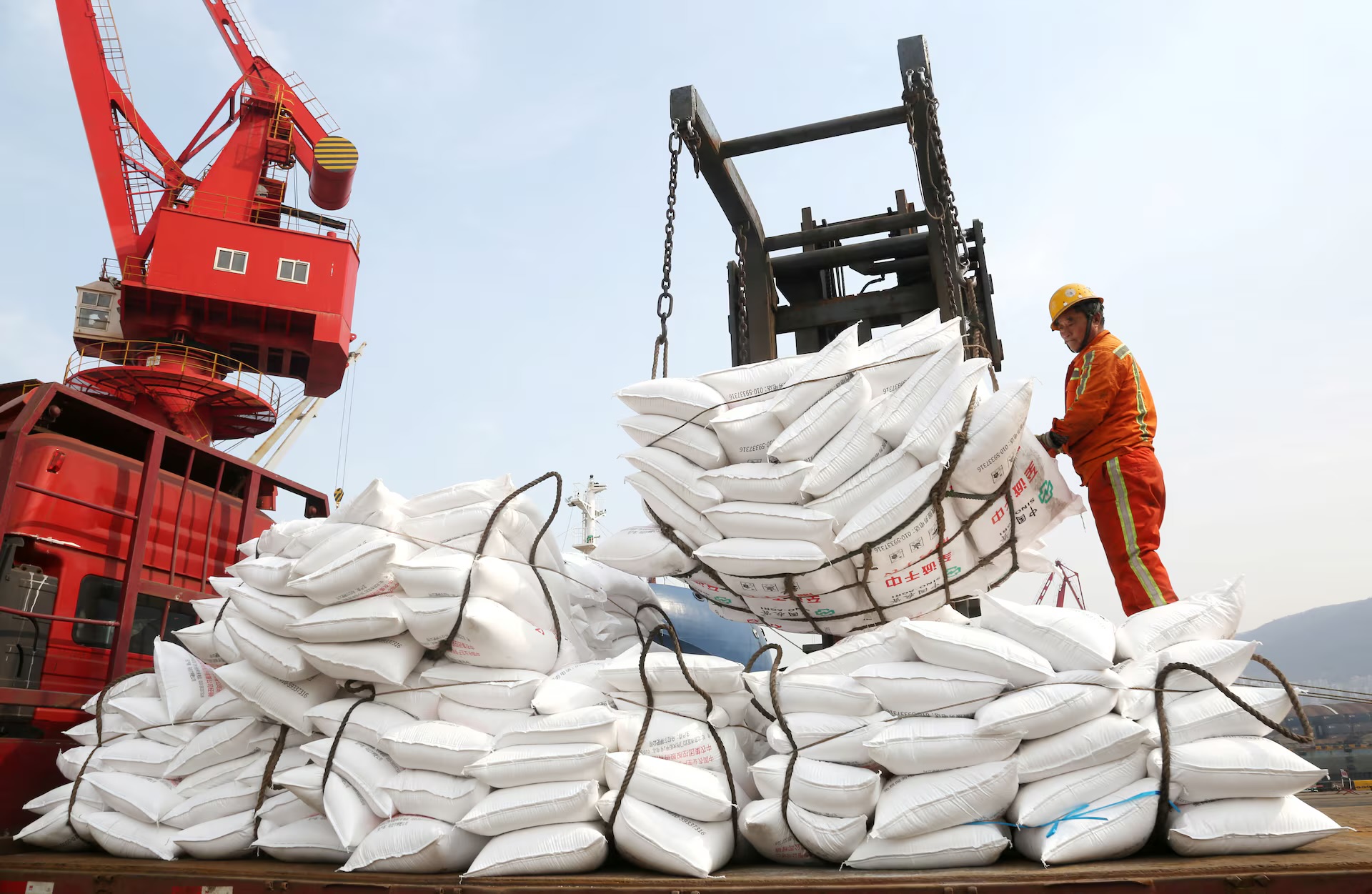
Beijing has introduced fresh curbs in mid-March targeting key fertiliser categories, including nitrogen-potassium blends and selected phosphate products. The measures add to existing export quotas and restrictions on urea, leaving only a limited range of products—most notably ammonium sulphate—available for international markets.
The impact is significant. Estimates suggest that between half and three-quarters of China’s fertiliser exports could now be restricted, potentially affecting up to 40 million metric tonnes of global supply. This is a substantial disruption given China’s dominant position in the sector, having exported fertilisers worth over $13 billion last year.
The timing of the restrictions has amplified concerns across global agricultural markets. Fertiliser shipments transiting the strategically critical Strait of Hormuz—which accounts for roughly one-third of the world’s seaborne supply—have slowed amid heightened geopolitical tensions tied to the Iran conflict. The bottleneck has already constrained availability and pushed prices upward in several regions.
Market analysts suggest that China’s actions reflect a broader strategic pattern. By limiting exports during periods of global scarcity, Beijing is prioritising domestic food security and shielding its agricultural sector from volatile price swings.
“This pattern is consistent: China restricts supplies rather than stepping in to stabilise global markets during tight conditions,” said a senior commodities analyst at a global research firm. “They are insulating their domestic market from external shocks.”
For import-dependent countries—particularly in South Asia, Africa, and parts of Latin America—the dual shock of Chinese export controls and Middle East supply disruptions could translate into higher input costs for farmers, reduced crop yields, and broader food inflation pressures in the months ahead.
As geopolitical risks intensify and supply chains fragment, the fertiliser market is increasingly emerging as a critical pressure point in the global food system—one that could have lasting economic and humanitarian consequences if disruptions persist.
